
If you have thin or fine hair, you’ve probably had this experience: you try clip-ins, they slide out by lunchtime, and the clips leave a sore patch. You look at tape-ins or bonds and wonder whether your hair can even carry them. And you’ve read at least one horror story about extensions causing traction hair loss.
Halo extensions exist for exactly this situation. Nothing attaches to your hair at all. A single weft sits on top of your head on an invisible wire, held in place by the weight of your own hair over it. No clips gripping fine strands, no adhesive, no beads, no heat.
This guide explains why halos are the safest option for thin hair, how to pick the right weight so it doesn’t look bulky, how to blend it so the wire disappears, and when a halo isn’t the right answer.
Quick answer:
Halo extensions are the safest extension type for thin or fine hair because they apply zero tension to your natural hair. Choose a halo of 140–150 g at 14–16” for fine hair, blend it with a light layer cut, and pair it with a small clip-in volumiser at the crown if you need more coverage on top.

Why thin hair and most extensions don’t mix
Every traditional extension method relies on your natural hair to hold weight:
-
Clip-ins grip a section of hair with a metal or silicone clip. On fine hair, that’s a lot of pull on very few strands, several times a day.
-
Tape-ins sandwich a slice of your hair. Kinder, but repeated re-taping on fine hair can thin the section further.
-
Beads, bonds and wefts anchor to small sections of hair for weeks at a time. Constant tension on fine hair is the textbook cause of traction alopecia — hair loss from pulling.
The problem isn’t the extension. It’s the attachment. And thin hair has less to attach to.
We cover the risks honestly in do extensions damage your hair?. The short version: damage comes from tension and weight concentrated on too little hair. Remove the attachment and you remove the risk.
How a halo works (and why there’s nothing to damage)
A halo is a single wide weft — Gemeria’s HaloHair Extensions are 140–180 g depending on length — attached to a thin, adjustable, transparent wire. You:
-
Section off the top 2–3 inches of your hair and clip it up.
-
Rest the wire on your head like a headband, with the weft hanging at the back and sides.
-
Let your top layer down over the wire.
That’s it. Your own hair lies over the wire and hides it. The weight of the halo rests on your head, not on any individual hairs. Take it off at night in two seconds.

Because nothing is gripping, glued or bonded:
-
No traction. No pull on your roots.
-
No sore spots. No clips digging into a scalp with less cushioning.
-
No product build-up at attachment points. There aren’t any.
-
No salon removal. You’re not committed to anything.
For a full explainer of the product itself, see what are halo hair extensions?.
Halo vs clip-ins vs tape-ins for thin hair
|
Halo |
Clip-ins |
Tape-ins |
|
|---|---|---|---|
|
Tension on natural hair |
None |
High (clips on small sections) |
Medium (weight spread across a tab) |
|
Risk of traction hair loss |
None |
Moderate with daily wear |
Low–moderate with repeated re-taping |
|
Visible on fine hair? |
Wire can peek if top layer is very sparse |
Clips often show through fine hair |
Tabs can show in updos |
|
Install time |
30 seconds |
5–10 minutes |
45–90 minutes (salon) |
|
Can you sleep in it? |
No (remove nightly) |
No |
Yes |
|
Wear an updo? |
Limited (band placement) |
Yes, with care |
Mostly |
|
Reusable / lifespan |
12+ months |
6–12 months |
6–8 weeks per install, hair reusable ×3 |
|
Gemeria price |
$279–$419 (140–180 g) |
From $40 for single pieces |
From $129 per pack |
For a side-by-side of the first two, we’ve written clip-in vs halo extensions.
Picking the right halo for thin hair (weight, length, colour)
This is where most people go wrong. They buy the biggest halo they can find, and it looks like a wig sitting on top of fine hair.
Weight: go lighter than you think.
-
Fine hair, shoulder length or shorter: 140 g at 14”. Gemeria’s 14” halo is the lightest in the range.
-
Fine hair, below the shoulder: 150–160 g at 16”.
-
Medium-fine hair: 160–180 g at 18–20”.
A halo that’s much thicker than your natural hair creates a visible “shelf” where your hair ends and the halo begins. Lighter halos blend; heavy ones look attached.
Length: no more than 4–6 inches longer than your own hair.
If your hair is at your collarbone, a 14–16” halo looks natural. A 20” halo on collarbone-length hair shows a hard line at your natural ends unless you have layers cut into the halo.
Colour: match your ends, not your roots.
Fine hair is often lighter at the ends where it’s been in the sun. Since the halo sits underneath your top layer, matching the ends gives the most seamless blend. Gemeria’s blonde halos come in 15 shades (#10–#25, blends #B1–#B12 and a highlight series); our colour-matching guide shows how to compare swatches in daylight.

6 blending tricks that hide the wire on fine hair
-
Keep enough hair on top. Leave at least 2 inches of your own hair above the wire. If your crown is sparse, add a clip-in volumiser at the crown above the halo so the top layer has more to cover the wire with.
-
Have the halo layered. Ask a stylist to cut face-framing layers into the halo (not your hair) so the ends blend with yours.
-
Tighten the wire correctly. Gemeria halos use an adjustable stretch wire. It should sit snugly around the crown without sliding when you tip your head forward.
-
Use the mini clips for security. Gemeria’s halo includes small clips at the sides for anyone who wants extra hold on very silky hair — but they’re optional, and most fine-haired wearers don’t need them.
-
Tease the roots lightly under the wire line to create a cushion the wire nestles into.
-
Curl or wave everything together. A loose wave through both your hair and the halo hides any line far better than poker-straight styling.
More styling ideas: halo extension hairstyles and how to hide extensions in thin or fine hair.
“Halo is the one extension I’ll recommend to a client whose hair is actively thinning. Everything else asks her hair to do work. A halo asks nothing.” — Gemeria stylist team
When a halo isn’t the right answer
Halos add length and volume around the back and sides. They don’t add hair on top. If your main concern is:
-
A widening part or thinning crown → a hair topper covers the top; a halo can’t. Many women wear both — topper on top, halo for length. Our guide to hair thinning solutions with wigs and extensions walks through the options.
-
A receding hairline or thin temples → a front hairline topper.
-
Hair shorter than chin length → there isn’t enough top layer to hide the wire. Wait until it reaches the chin, or look at a half-head wig.
-
You want to wear a high ponytail daily → the wire limits updos. Clip-in ponytails or a topper will serve you better.
If your hair is medium-density rather than fine, and you want something more permanent, Genius wefts are the thinnest semi-permanent option and can be worn on finer hair with a skilled stylist.
Caring for a halo (so it lasts a year or more)
Because a halo isn’t attached, it’s the easiest extension to look after:
-
Wash it every 10–15 wears in cool water with sulphate-free shampoo. Condition mid-length to ends only.
-
Air-dry flat. Heat-style once dry on a low-medium setting; Gemeria halos are 100% human hair and take heat like your own.
-
Store it flat or hung, wire straightened, away from sunlight.
-
Brush from the ends up before and after each wear.
Treated this way, a Gemeria halo comfortably lasts 12 months of regular wear. The full routine is in our human hair extension care guide.
What real wearers with fine hair say
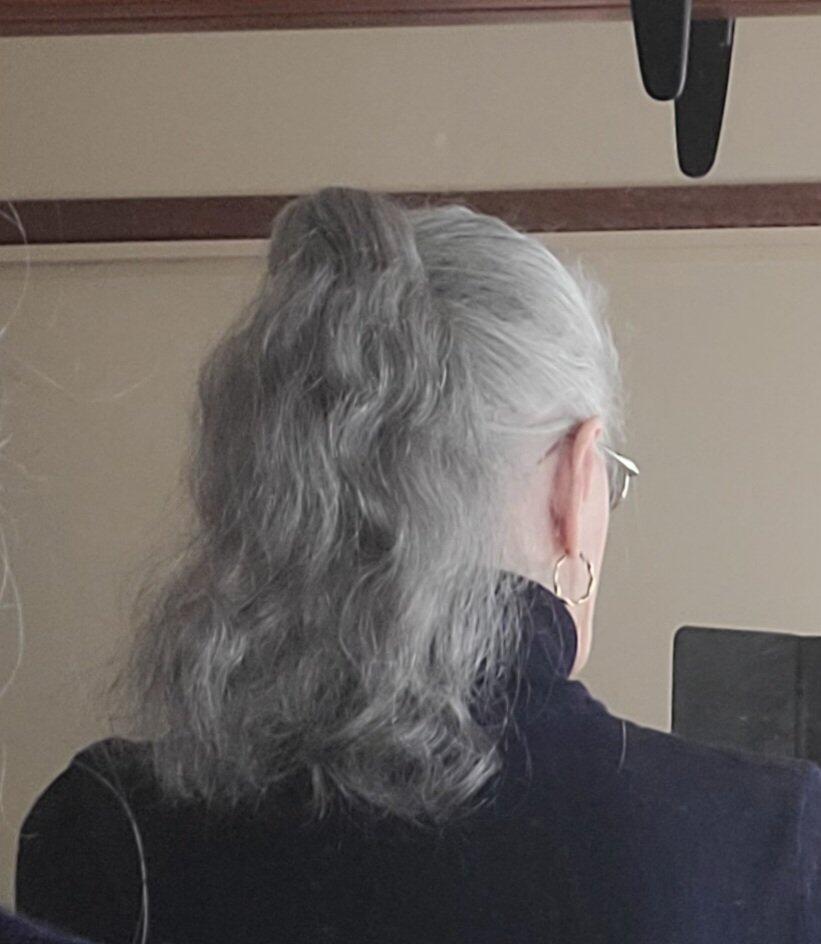
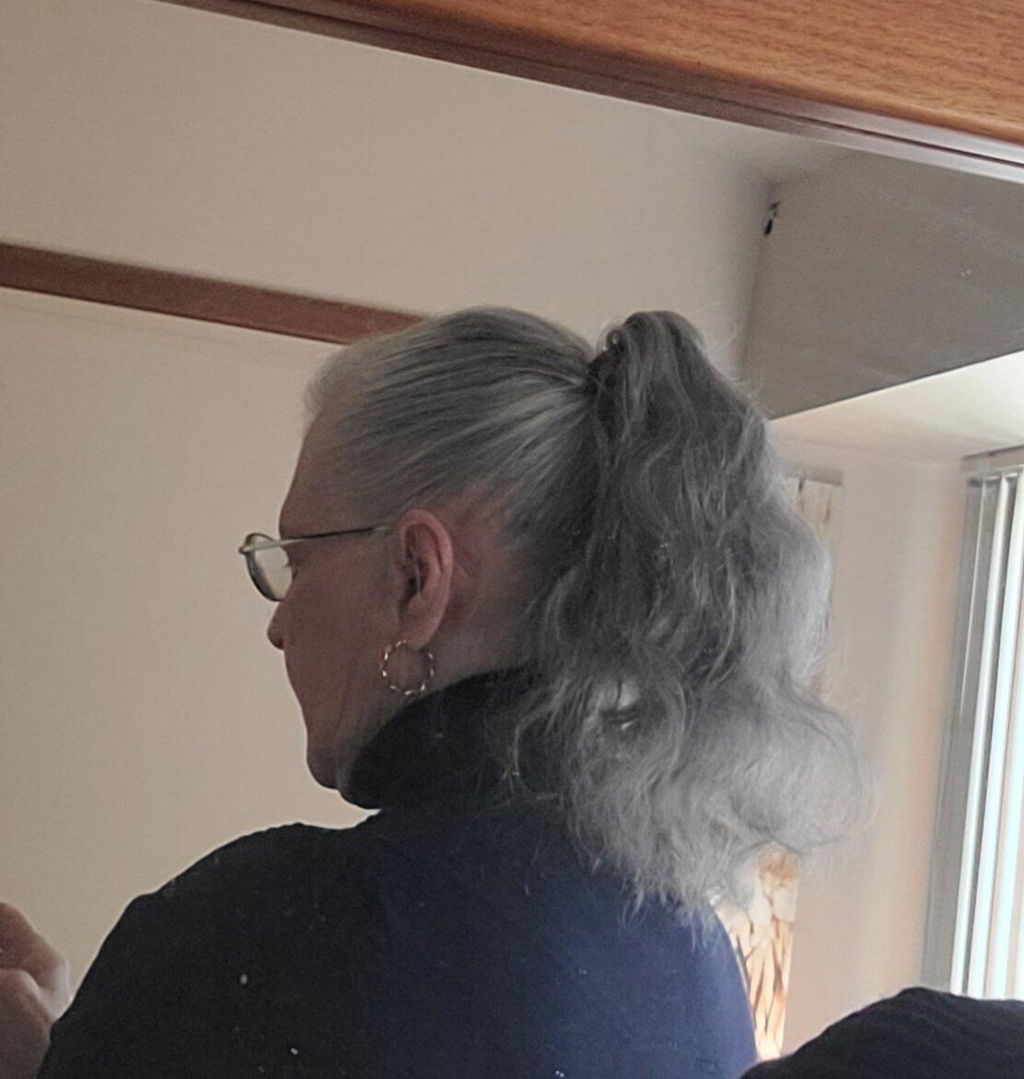
Gemeria customers with fine hair consistently point to the same things: no soreness, nothing to feel through the hair, and the fact that it comes off in seconds. One Australian customer with fine hair described her grey clip-on ponytail as “the best I have purchased” and ordered a second immediately — the same reasoning applies to halos: on fine hair, the lightest, least-attached option wins.
FAQ
Do halo extensions work on thin hair?
Yes — they’re the extension type best suited to it, because nothing attaches to your hair. The only requirement is enough hair on top (roughly 2 inches above the wire) to cover the wire.
Can you see the wire on fine hair?
Not if the halo is placed correctly and your top layer covers it. If your crown is very sparse, add a small volumiser piece at the crown so there’s more hair to cover the wire.
What weight halo is best for thin hair?
140–160 g at 14–16”. Heavier halos create a visible line where your hair ends. Gemeria’s lightest halo is 140 g at 14”.
Can halo extensions cause hair loss?
No. Hair loss from extensions comes from tension on the roots. A halo applies none, because the weight rests on your head via the wire, not on your hair.
Can I sleep or shower in a halo?
No. Remove it at night and before washing. That’s also why it lasts so long — it’s never exposed to sleep friction or daily washing.
Halo or clip-ins for thin hair?
Halo. Clip-ins grip small sections of hair and, worn daily, are a known cause of thinning at the clip points. A halo is safer and faster to put on.
Shop halo extensions
-
HaloHair Extensions — 14”–20”, 140–180 g, natural shades, 100% human hair
-
Blonde HaloHair Extensions — same design, 15 blonde and blended shades
-
Need more on top? Pair with a clip-in volumiser or bio-base topper
Not sure whether a halo, topper or volumiser is right for you? Read how to choose the best hair extensions or send us a photo of your hair and a Gemeria stylist will recommend an option.