
Wig density is the amount of hair on a wig, shown as a percentage: the higher the number, the fuller the wig. A 130% wig looks soft and natural, 150% is a versatile middle ground, and 180% to 200% gives noticeable volume. The right density depends on your length, your texture and the look you want.
A density that does not suit your length or style can make even a high-quality wig look less natural. This guide explains what each density means, how length and texture change the result, and how to choose with confidence.
What Is Wig Density?
Density describes how much hair is sewn or knotted onto the wig cap. It is expressed as a percentage, with higher numbers meaning more hair across the cap and a fuller finish.
It is not the same as hair thickness. Thickness describes each individual strand, while density describes how many strands there are. Two wigs made from the same hair can look completely different at 130% and 200%.
Wig Density Chart: What Each Level Looks Like
| Density | Fullness | What It Looks Like | Suits |
|---|---|---|---|
| 100–110% | Light | Low density; very soft and flat at the root | Subtle looks and lace areas such as closures |
| 120–130% | Natural | Similar to the average head of hair | A natural, everyday look |
| 150% | Medium | A little extra volume while still looking natural | Everyday wear with more body |
| 180% | Full | Noticeably thicker than natural hair | Longer lengths and bolder styles |
| 200% and above | Extra Full | Even thicker, high-volume hair | Very long hair and glamorous styling |
How Length and Texture Change Density
Length
The longer the hair, the more it needs to look full at the ends. A 150% wig can look generous at 14 inches but noticeably thinner at 26 inches, because the same amount of hair is spread over a longer length. As a rule, longer wigs benefit from higher density.
Texture
Curly and wavy hair naturally takes up more space than straight hair, so a curly wig looks fuller than a straight wig at the same density. If you love curls but want a natural look, you may not need the highest density. Our guide to styling a curly wig naturally shows how volume changes with styling.
Parting and Hairline
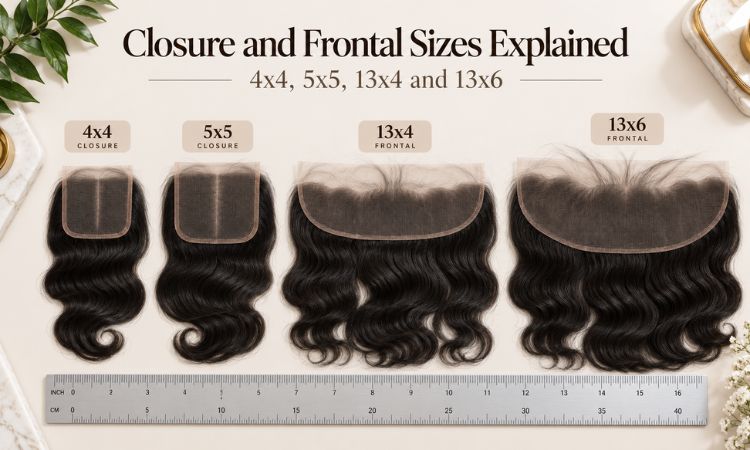
A lighter density at the hairline and parting looks more like natural growth. That is why closures and frontals are made at a lower density than the rest of the wig: it keeps the parting soft and believable.
Density Across the Gemeria Wig Range
- Front lace wigs are made at 170–200% density using three-head machine double wefts, with lace bases in 4x4, 5x5, 13x4 and 13x6.
- Full lace wigs are also 170–200% density, fully hand-knotted with freestyle parting.
- Closures and frontals are made at 100–120% density for a natural-looking part.
- Glueless bio-base wigs are styled with a natural density on top and fuller ends, which mirrors how real hair grows.
- Half head wigs are sold by weight instead: 200 g or 300 g at 16 and 20 inches, and 230 g or 330 g at 24 inches. The heavier option gives a fuller result.
All Gemeria lace wigs use single-donor South Indian temple hair with cuticles intact and aligned. Compare the two lace constructions in lace front vs full lace wigs.
Density vs Weight: Reading Product Listings
Some hairpieces are sold by weight in grams rather than by a density percentage, especially half wigs, V-part wigs and clip-ins. Weight tells you the total amount of hair, so compare options at the same length. For example, Gemeria's Natural Straight V-part wigs weigh 290 g at 16 inches and 330 g at 24 inches, so the extra hair keeps longer lengths looking full. Our half head wig vs V-part wig guide explains how each one sits on the head.
How to Choose the Right Wig Density
| If You Want… | Consider… |
|---|---|
| A natural, everyday look | 120–130% |
| A natural look with a little extra body | 150% |
| Long straight hair (22 inches and above) that looks full at the ends | 180% or more |
| Curly or wavy hair with natural volume | A lower density than you would choose for straight hair |
| Maximum glamour and volume | 200% and above |
Also think about:
-
Your own hair. If friends and colleagues know your natural hair, a density close to it will look most believable.
-
Comfort. More hair means more weight and warmth, which matters for all-day wear and warmer climates.
-
Styling. Higher density holds curls and updos well, while lighter density is quicker to wash, dry and style.
-
Room to adjust. A stylist can thin out a wig that is too full, but cannot add hair to one that is too thin. If you are torn between two levels, the fuller option gives you more flexibility.
Common Wig Density Mistakes
- Choosing very high density for a short bob. Too much hair on a short cut can look bulky. Bobs and short wigs usually look best at natural to medium density.
- Choosing low density for very long hair. The ends can look thin and wispy, which makes the wig look less natural.
- Ignoring texture. A curly wig at the same density as a straight one will look noticeably fuller.
- Forgetting the hairline. A heavy hairline rarely looks natural, so lace and parting areas should stay lighter.
Caring for Higher-Density Wigs
Fuller wigs hold more water and more product, so they need a little extra care. Detangle in small sections from the ends upwards, allow plenty of time for the wig to dry fully on a stand, and avoid heavy products that weigh the hair down. Our guides to keeping wigs from tangling and caring for a natural hair wig cover the full routine.
Final Thought
Wig density shapes how natural your wig looks as much as length or colour does. Match it to your length, texture and lifestyle: lighter for natural everyday wear, fuller for long hair and glamour. Explore Gemeria's front lace wigs and glueless wigs, or read different types of wigs explained to compare caps and bases.