
The best clip-in extensions for thin hair are lightweight, have a flat seamless weft and match your natural colour closely. Fine hair has less density to hide clips and wefts, so details that barely matter on thick hair make a big difference to how natural your extensions look.
Choose well and clip-ins can add instant length and volume with no salon appointment, no bonds and no commitment. This guide explains exactly what to look for and which options suit fine or thinning hair best.
Why Thin Hair Needs a Different Approach
Clip-in extensions on thin hair face three challenges:
- Less coverage. With fewer strands to lay over the top, wefts and clips are easier to spot, especially in wind or when you tuck your hair behind your ears.
-
Less support. Heavier sets place more weight on each section of fine hair, which can feel uncomfortable over a full day.
-
Blending. A very full, very long set on fine hair can look like two separate layers rather than one head of hair.
The good news is that each of these can be solved with the right product and placement. Our guide to hiding hair extensions in thin or fine hair covers placement in detail.
7 Things to Look For in Clip-In Extensions for Thin Hair
1. A Flat, Seamless Weft
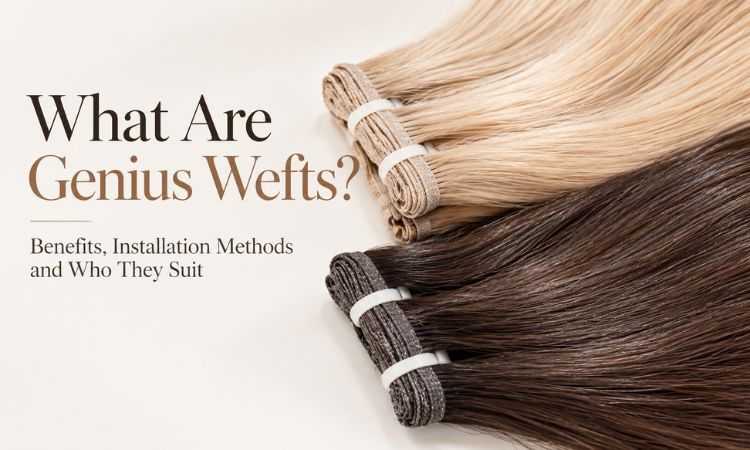
Classic clip-ins use a sewn lace weft, which is durable but has a slight ridge. A seamless weft uses a thin silicone base that lies flat against the scalp, so it is much easier to hide under fine hair. Gemeria's Seamless 7 Set Clip-Ins are designed for exactly this.
2. The Right Weight
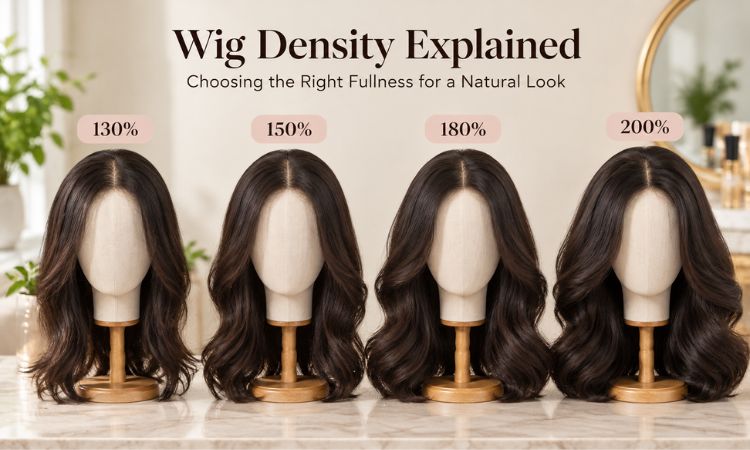
Heavier is not always better. A set that is too full for your natural density is harder to blend and more tiring to wear. Gemeria's 7-set clip-ins come in 120 g (at 16 inches), 160 g and 220 g, so you can choose fullness to suit your own hair. For fine hair, a lighter set at a moderate length usually blends most naturally.
3. A Sensible Length
The longer the extensions, the more hair is needed to keep the ends looking full. Moderate lengths blend more easily with fine hair, while very long lengths can look thin at the ends unless you choose a fuller set. Remember that wavy hair is measured stretched, so it will look shorter when worn.
4. Flexible, Well-Distributed Pieces
A 7-piece set spreads weight across 16 clips, rather than relying on a few large pieces. You do not have to wear every piece every day: on finer days, simply use the back and middle pieces.
5. Secure but Gentle Clips
Clips should grip your hair, not your scalp. Lightly backcomb or add a little dry texture spray at the root before clipping for extra grip, and always remove clip-ins before bed. Read do extensions damage your hair? for more on wearing them safely.
6. An Exact Colour Match
Fine hair hides less, so colour mismatches show more. Match to the ends of your hair, not the roots, and consider balayage shades or single clip highlights to blend multi-tonal hair. Our guide on matching extensions to your natural hair explains how.
7. Real Human Hair
Human hair can be curled and straightened to match your texture, which is essential for seamless blending. Gemeria's clip-ins are 100% real human hair, and the Seamless range uses virgin Remy hair sourced from South Indian temples.
Best Clip-In Options for Thin Hair Compared
| Option | Pieces and Clips | Weight | Price From (USD) | Best For |
|---|---|---|---|---|
| Seamless 7 Set Clip-Ins | 7 pieces, 16 clips; flat silicone weft | 120 g (16"), 160 g or 220 g | $433 | The flattest, most discreet full-head finish |
| Classic 7 Set Clip-Ins | 7 pieces, 16 clips; lace weft | 120 g (16"), 160 g or 220 g | $391 | Value for fine-to-medium hair that covers wefts well |
| 1 Piece Clip-In Volumizer | 1 piece, 4 clips | 50–90 g, by length | $110 | Quick fullness at the back or extra body for a lighter set |
| Halo Extensions | Adjustable stretch-wire halo with a 2-piece clip-in volumizer set | 140–180 g, by length | $279 | Volume with minimal clipping; below-shoulder or layered hair |
Torn between a halo and clip-ins? Compare them in clip-in vs halo hair extensions, or read why halo extensions are a gentle choice for thin hair.
Clip-Ins, Halo or Topper: Which Do You Need?
Clip-ins add length and volume underneath your own hair, but they do not cover the top of your head. If your scalp shows at the part or crown, a hair topper is designed for that area and can be worn alone or alongside clip-ins.
- Thin all over, healthy part: seamless clip-ins or a volumizer.
- Fine, fragile hair that dislikes clips: a halo, which rests on an adjustable wire.
- Visible scalp at the part or crown: a hair topper. Learn more in all about hair toppers.
How to Wear Clip-Ins on Thin Hair
- Start at the nape and work upwards in clean, horizontal sections.
- Add light texture at the root of each section so the clips hold firmly.
- Keep the top pieces well below your parting so they stay covered.
- Use fewer pieces at the sides, where hair is often finest.
- Blend with soft waves; see hairstyles with clip-in extensions for ideas.
- Remove your clip-ins before bed and brush them gently from the ends upwards.
For a full walkthrough, read how to apply clip-in hair extensions.
Common Mistakes to Avoid
- Choosing the fullest set by default. More hair than your own can support is harder to hide and less comfortable.
- Clipping too close to the parting. Leave enough of your own hair on top to cover every weft.
- Matching colour at the roots. Extensions blend with the mid-lengths and ends, so match those instead.
- Skipping heat styling. A few soft waves through both your hair and the extensions hides the transition far better than leaving them straight.
Final Thought
For thin hair, choose a seamless weft, a weight that matches your density, a moderate length and an exact colour match. Start with Gemeria's Seamless 7 Set Clip-Ins for a discreet full-head look, or add a clip-in volumizer for quick, easy fullness.